Deciding to repair your hot water system can be a sensible choice if it is less than eight years old, the issue pertains to a single component (such as a thermostat, element, valve, or thermocouple), and there are no leaks from the tank itself. When the unit reaches 10 to 12 years of age, shows signs of rust or leaking, or if the cost of repair approaches half of a new system’s price, replacement becomes the more prudent option. This guideline is what we follow throughout the Hills District.
Here’s how to evaluate which choice is best for your circumstances.
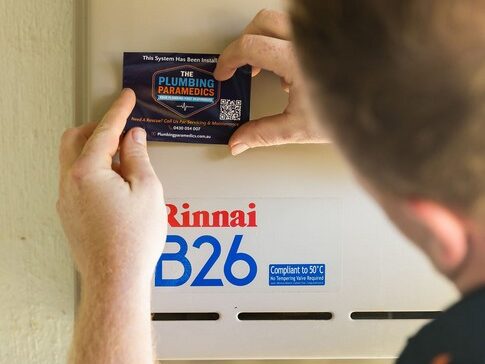
How Old Is Your Hot Water System?
Establishing the age of your hot water system is crucial as it provides valuable insight beyond just assessing symptoms. Most storage hot water systems in Sydney typically last between eight and twelve years. Electric and gas storage tanks generally fall within this timeframe, while continuous flow (instantaneous) gas units may last longer when properly maintained.
If your system is under eight years old and has only one fault, repairing it is usually your best option. if it surpasses 10 to 12 years, you might be investing in a unit nearing the end of its life cycle, which is likely to fail again soon.
To find out the installation date, inspect the compliance plate or sticker affixed to the unit. If it is not visible, we can often determine the model number during our visit.
Which Component Is Causing the Problem?
Pinpointing the specific fault is equally important as knowing the system’s age. Some issues are cost-effective to fix, while others indicate that the tank has reached the end of its useful life.
Repairs Worth Considering
Common repairs include replacing a heating element or thermostat in an electric system. For gas storage or continuous flow units, problems such as a faulty thermocouple, pilot assembly, or igniter can also be rectified. A leaking tempering valve or pressure relief valve (the small valve that drips into a drain line) usually requires a straightforward part replacement rather than necessitating a new system purchase.
In these scenarios, repair is clearly advantageous, as the tank remains in good shape and we are merely replacing a worn-out component.
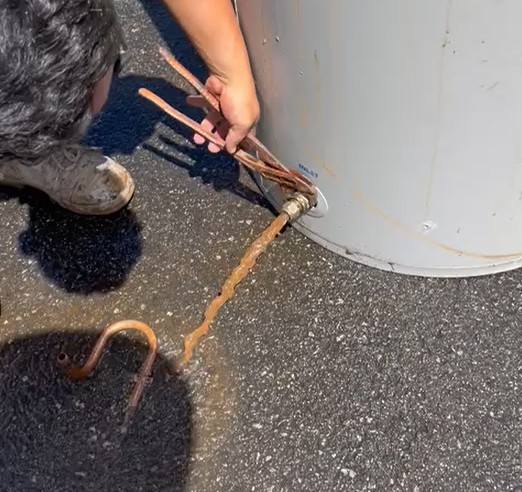
When Should You Consider Replacement?
If the tank is leaking, showing signs of rust, or if water is collecting around the base without loose fittings, this suggests internal corrosion. A rusted tank cannot be mended. Once the steel structure fails, the only viable solution is to install a new unit.
In some cases, you can replace a failed sacrificial anode to extend the tank’s life by a few more years, provided this is done before significant corrosion sets in. Once the tank begins to weep, that opportunity has passed.
How Do Repair Costs Compare to New System Prices?
Adopt the half-rule: if the repair cost approaches around half the price of a new unit, replacement is often the more rational choice, especially for older systems. Spending $700 on a 13-year-old tank that may fail again within eight months is not a wise investment.
We do not offer fixed pricing as costs vary based on the system type, the specific part requiring replacement, and accessibility. For instance, a straightforward element replacement on an easily accessible electric unit is at the lower end of the price spectrum. In contrast, a full replacement—especially for gas, solar, or heat pump systems that require new connections—will be considerably more expensive. We provide free quotes for both options when feasible, allowing you to compare costs before making a decision.
For more information about the systems we install and service, visit our hot water services page.
Does the Type of System Affect Your Decision?
Absolutely. The financial implications differ across the four main types of systems.
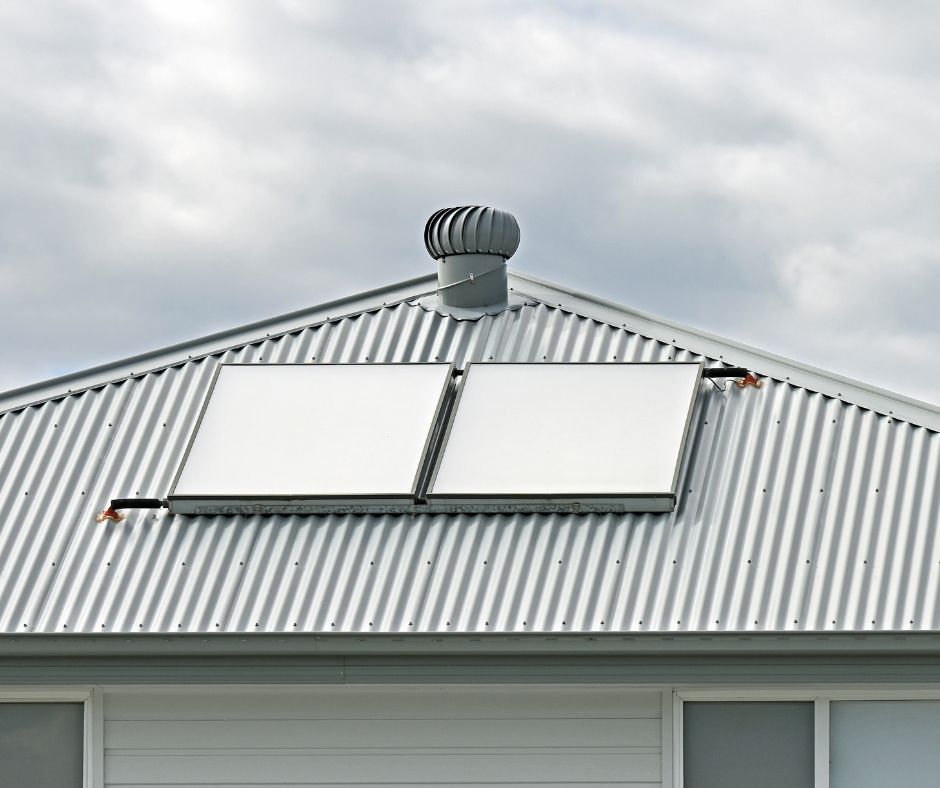
Electric storage systems are the most affordable to replace, thereby setting a lower threshold for opting for replacement over repair. Gas storage and continuous flow systems require more careful deliberation, as detailed on our gas hot water page. A high-quality continuous flow unit may warrant repair even later in its lifespan. Solar and heat pump systems involve higher initial costs, making component repairs on a functioning unit generally more beneficial than full replacement.
A vital rule applies to all types: installation and replacement of hot water systems in NSW must be carried out by a licensed plumber, and any gas work must be executed by a licensed gas fitter. This is a legal requirement, not merely a suggestion. We hold both the necessary NSW Fair Trading licences in-house.
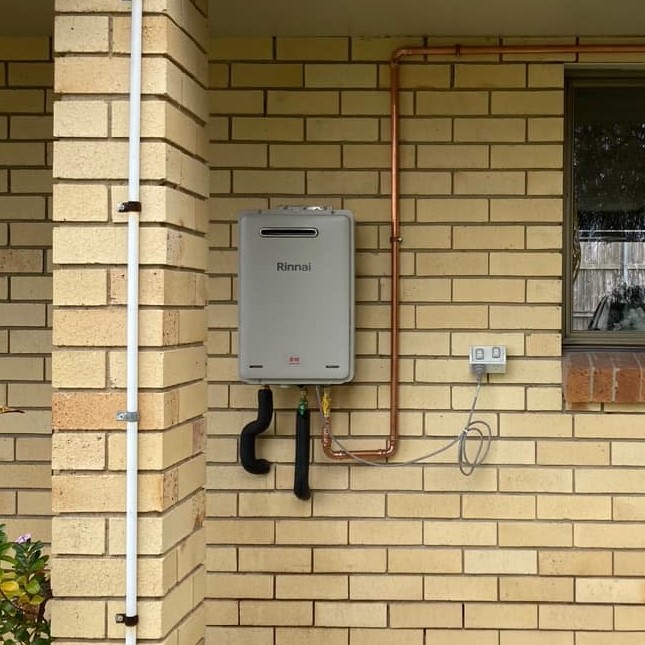
When Is Immediate Replacement the Wisest Choice?
Certain situations clearly indicate that replacement is the more prudent financial decision.
If the tank is leaking, the unit is over 12 years old, has previously undergone repairs, is providing rusty or discoloured water, or cannot meet household demands (leading to cold showers for later users), it is time to consider replacement. If the repair estimate exceeds half the cost of a new unit and the system is well past its prime, replacement is usually the best course of action.
If you are thinking about an upgrade, this is also an ideal time to evaluate a more energy-efficient system. We cover this in detail during our quoting process.
Frequently Asked Questions About Hot Water Systems
What Is the Typical Lifespan of a Hot Water System in Sydney?
Most storage hot water systems in Sydney homes last around eight to twelve years, irrespective of whether they are electric or gas. Continuous flow (instantaneous) gas units may have a slightly extended lifespan with regular servicing. Factors such as water quality, system workload, and timely replacement of the sacrificial anode can influence the actual lifespan. Once a unit surpasses ten years, failures become more frequent, making replacement generally more financially sensible than continuous repairs. To determine the age of your unit, check the compliance plate for the installation date, or we can ascertain it from the model number during our visit. Knowing the age is essential when deciding whether to repair or replace.
Is it Worth Repairing a Ten-Year-Old Hot Water System?
It can be worthwhile, but only if the issue is confined to a single part and the tank remains in good condition. Replacing a thermostat, element, thermocouple, or pressure relief valve on a ten-year-old system can be a reasonable choice if the tank shows no signs of rust or leaks. Investing heavily in repairs for a tank that is corroding is generally ill-advised, as subsequent failures are likely to arise within a year. As a guideline, if repair costs approach half the price of a new system for a unit of this age, replacement is often the more sensible choice. We provide side-by-side quotes for both repairs and replacements whenever possible, allowing you to clearly see the figures and make an informed decision.
What Indications Suggest My Hot Water System Needs Replacing?
The most obvious warning sign is if water is pooling or leaking from the tank, indicating that the steel has corroded and cannot be repaired. Other red flags include rusty or discoloured hot water, the system failing to meet household demands, unusual banging or rumbling noises from the tank, and the unit being over 12 years old with a malfunction. A single failed part in a younger, well-maintained tank typically suggests repair rather than replacement. If you observe multiple issues simultaneously—age, leaks, and poor performance—it is often more cost-effective to replace the unit rather than continue patching it up. We can assess the situation on-site and offer a free quote for either option, with no obligation to proceed.
Can I Install My Own Hot Water System?
No, you cannot. In NSW, the installation and replacement of hot water systems must be conducted by a licensed plumber, and any gas connections must be managed by a licensed gas fitter. This is not merely a recommendation; it is the law. Attempting a DIY installation can void your home insurance and the manufacturer’s warranty, and it poses significant safety hazards involving gas, scalding water, and pressure. All components, including tempering valves and pressure relief valves, must comply with plumbing regulations. You can safely check the age on the compliance plate and inspect for leaks around the base before making a call. We possess the requisite NSW Fair Trading plumbing and gas fitting licences, allowing us to handle the entire job efficiently.
What Is the Cost of Replacing a Hot Water System?
We do not provide fixed prices since costs vary significantly based on the type of system and installation specifics. Electric storage systems are the most affordable to replace, while gas, solar, and heat pump systems generally incur higher initial costs but can reduce running expenses over time. The total cost is influenced by the chosen unit, whether it involves a straightforward replacement or a transition to a different system type, the installation location (internal versus external, accessibility), and any new water or gas connections required. The best way to obtain an accurate price is to request a free, tailored quote for your situation. We will evaluate your current setup and your desired options before presenting a clear, fixed figure with no hidden surprises. Guessing online prices rarely reflects the actual job requirements.
How Long Does It Take to Replace a Hot Water System?
A straightforward like-for-like replacement typically takes just a few hours and can often be completed on the same day, provided we have the correct unit available. The process may take longer if changing system types, such as from electric to gas or from storage to continuous flow, as this may involve new connections and possibly relocating the unit. Accessibility also plays a role: a unit located in a confined space or up a flight of stairs will require more time than one situated in an open area. If you are currently without hot water, we will provide you with a realistic timeframe before commencing work. We keep common systems in stock, allowing for same-day replacements whenever possible to avoid leaving you without hot water for long. In emergencies, we prioritise swift responses.
Need Expert Assistance with Your Hot Water System?
If you are experiencing problems with your hot water system, the most effective course of action is to allow us to assess it. We will provide an honest evaluation of whether repair or replacement is necessary, offer quotes for both options when appropriate, and we are fully licensed to manage the entire job from start to finish.
Contact The Plumbing Paramedics at 0430 054 007 for a complimentary quote, or explore our hot water services and electric hot water options.
Original Article First Published At: Hot Water System Repair vs Replace — When Each Makes Sense
The Article: Hot Water System Repair or Replace: Which Is Right for You? first appeared on https://writebuff.com
The post Hot Water System: Repair or Replace for Your Needs? appeared first on Limits Of Strategy.
The Article Hot Water System: Should You Repair or Replace It? found first on https://electroquench.com