
The Chronicles of Welsh Kings: A Narrative by Goldie the Grey. This account seeks to reclaim the true history of Welsh dynasties while directly addressing the narrative crafted by Geoffrey of Monmouth in his renowned work, The History of the Kings of Britain.
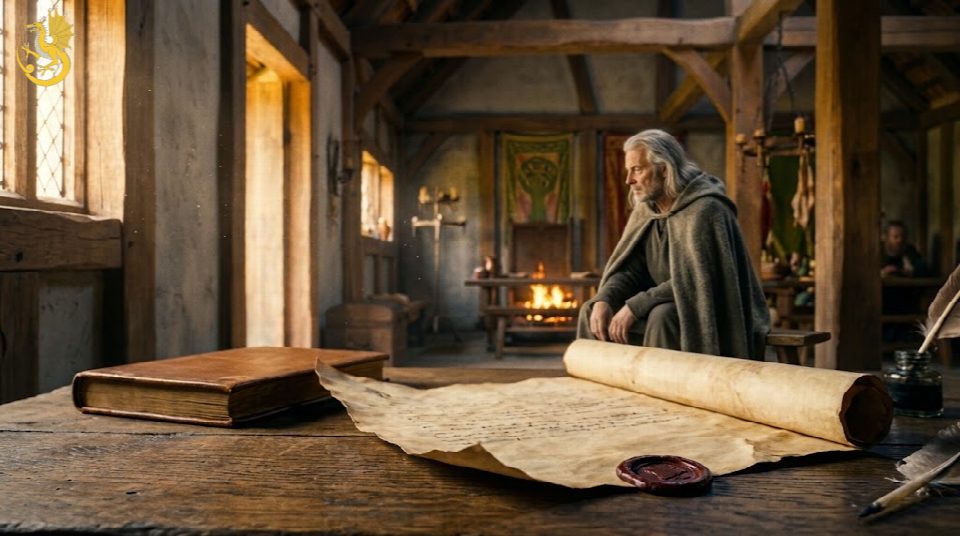
What Are the Two Distinct Deaths Experienced by a Monarch?
A monarch can indeed face two distinct forms of death: the first occurs when their life ends, while the second happens when their name gradually disappears from the collective memory of their people.
The initial death can occur in various ways, such as on the battlefield, in a sickbed, through drowning, or at the hands of an assassin. The second death depends on those who decide what should be remembered.
For Goldie the Grey, this narrative begins at the point of this second death.
Long before the fabled court of Camelot, and well before the era of shining armour and grand romances, the rulers of Wales commanded the land.
These were families whose power derived from their lineage, strategic alliances, military victories, and the complex task of governing a kingdom.
Mothers forged alliances through marriage, while sons faced dangerous claims to the throne. Poets immortalised names that transcended the confines of individual lifetimes.
This series delves into the lives of these remarkable individuals. It draws upon the history of Welsh dynasties from 844 to 918, embarking on a vivid exploration of the identities and significances that Goldie believes persist beneath the Arthurian legacy.
At the heart of this narrative is a challenge to Geoffrey of Monmouth.
Geoffrey’s History of the Kings of Britain, composed in the twelfth century, bestowed considerable literary weight upon the tale of Arthur. It situated British rulers within a sweeping narrative that encompassed origins, conquests, grandeur, and eventual decline.
The influence of Geoffrey’s work was substantial: over 225 Latin manuscripts survive, with nearly 50 dating back to the twelfth century. Documented
His narrative did not merely reach an audience; it established the framework through which future generations would engage with Britain’s legendary past. Inferred
Goldie’s assertion serves as a claim of betrayal.
This accusation lacks a surviving confession and may not be embraced by all historians. It reflects the perspective of this series’ narrator: a writer who engaged with British traditions but could still manipulate them in ways that obscured the dignity and ongoing sovereignty of the Welsh.
This distinction is vital. We will not fabricate evidence to condemn Geoffrey. His documented methods, patrons, and narrative choices provide ample material for examination.
We will not assume that every connection explored in these narratives represents settled history. Where Goldie offers interpretation, he will do so transparently. Where records provide clarity, we will heed their words. Where ambiguity remains, it will be acknowledged openly.
Geoffrey will not be afforded precedence solely due to the notoriety of his work.
How Did Geoffrey Utilise an Ancient Text to Assert His Authority?
Geoffrey presented his readers with a convincing rationale for his insights. He claimed to be translating an ancient text in the British language, supposedly given to him by Walter, Archdeacon of Oxford. Documented
This assertion was advantageous for a writer. An ancient source implied access to knowledge that was otherwise unattainable.
A British original bestowed the narrative with intrinsic authority. A Latin translation extended that perceived authority into the learned realms of ecclesiastics, courts, and chronicles. Inferred
Yet, the purported source cannot be independently verified as the continuous ancient history that Geoffrey described. Modern scholarship generally regards the single-book explanation as a literary device rather than a comprehensive account of how he crafted his work.
Scholars instead identify a blend of identifiable Latin sources, genealogical traditions, prophetic texts, and creative reconstruction. Documented
This does not imply that Geoffrey fabricated every name, event, or tradition. The more critical question lies in how he employed the material he inherited.
A storyteller chooses the point of departure. A chronicler determines the line of succession. Both make decisions regarding which relationships merit explanation and which contradictions can be reconciled.
The accounts of the boy presented before the King serve as a particularly revealing example. In the earlier Historia Brittonum, the boy claims to be Ambrosius.
Geoffrey alters this narrative, introduces the identity of Merlin, and provides an alternative explanation for the boy’s conception. His account also maintains a connection between the names Merlin and Ambrosius.
These are documented traits of the texts, not independent validation that the events occurred as described. Documented
Here we can observe a tradition being reconstructed.
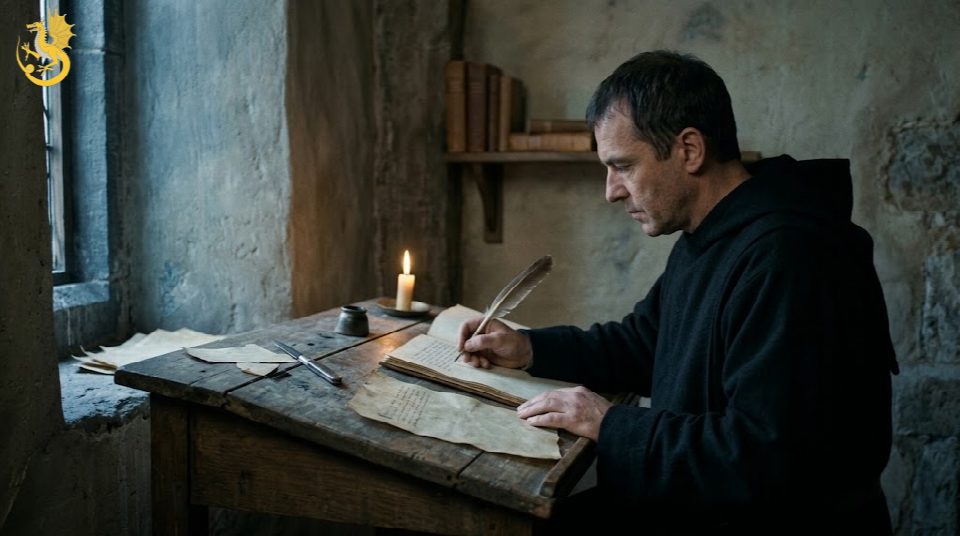
For Goldie, the peril does not reside in the act of storytelling itself. Bards convey tales. Communities maintain their collective memory through narratives.
The remainder of this tale is reserved for supporters. Discover it on House of Rhodri.
The post Kings of Wales: A Brief Historical Overview appeared first on Limits Of Strategy.
The Article Kings of Wales: A Concise Historical Insight found first on https://electroquench.com
