Master the Key Principles of Support and Resistance in Cryptocurrency Trading
What Constitutes Support in Cryptocurrency Trading?

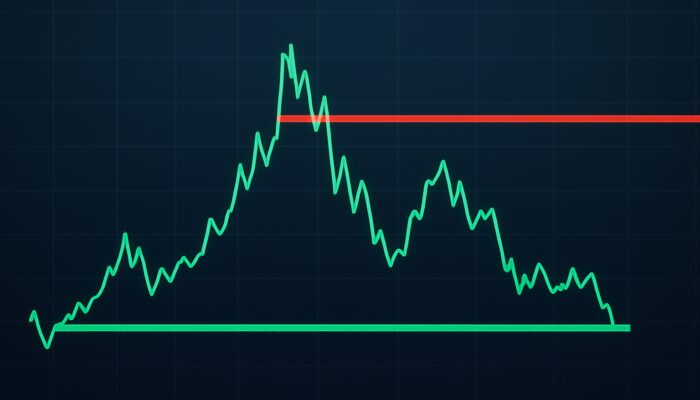
Support in the realm of cryptocurrency trading represents a significant price level where buying interest surges, effectively hindering further declines in the asset’s value. This threshold acts as a sturdy floor discernible on trading charts, offering key insights during market evaluations. For example, if Bitcoin frequently establishes support around the $30,000 mark, traders consider this highly relevant, indicating robust buying activity at that price. By closely observing trading patterns, particularly the frequency of rebounds at this threshold, traders can better gauge market sentiment and predict potential price movements with improved accuracy.
In real trading scenarios, support levels fluctuate due to numerous influencing factors, including overall market volume and trader psychology. When a significant number of traders identify a support point at a certain price, they typically place buy orders there, initiating a self-reinforcing cycle of purchasing. A prime example emerged during the Bitcoin bull market of 2020, when many traders recognised a solid support level at $10,000. This recognition prompted a substantial price increase as buyers eagerly purchased Bitcoin each time it approached this level.
How Can You Identify the Key Features of Resistance in Cryptocurrency Trading?
Resistance serves as a price ceiling where selling pressure builds, often leading to price reversals. Identifying these resistance levels is crucial for traders, who meticulously analyse historical data and market trends to effectively anticipate potential price movements. Understanding the nuances of resistance can greatly enhance trading strategies, allowing traders to foresee downturns at specific price points. Recognising resistance levels on trading charts offers several advantages:
- Facilitates the identification of optimal selling points.
- Reduces the likelihood of overtrading during price peaks.
- Provides insights into market sentiment and trend strength.
- Increases the chances of identifying breakout opportunities.
- Enhances portfolio management and asset allocation.
- Offers a structured approach for setting stop-loss orders.
By thoroughly analysing resistance levels, traders can refine their entry and exit strategies, leading to more informed decisions that align closely with current market conditions and dynamics.
Understanding the Core Concepts of Support and Resistance in Trading
Support and resistance are fundamental concepts within technical analysis. They represent price points that historically halt market trends and provide invaluable insights into market behaviour. Traders leverage these concepts to make informed decisions, focusing on price patterns that signal potential shifts in trading activity. As prices approach these levels, heightened volatility often occurs as traders react to the psychological implications of encountering support or resistance.
Considering various cryptocurrencies, such as Ethereum and Ripple, a comprehensive analysis of these levels aids in understanding price fluctuations and market cycles. For instance, if Ethereum consistently retraces to establish support around $2,000, traders might view this as an opportune moment to enter long positions. A thorough understanding of these dynamics is essential for anyone aspiring to adeptly navigate the complexities of the cryptocurrency market.
How Do Support and Resistance Function in Cryptocurrency Trading?
What Influences the Dynamics of Support in Cryptocurrency Markets?
The mechanisms that underpin support in cryptocurrency markets involve a notable increase in buying activity at specific price levels, effectively creating a buffer against price declines. Trader sentiment and overall market volume heavily influence this dynamic, playing a critical role in maintaining price stability. When a cryptocurrency, such as Litecoin, approaches a historical support level, the expectation of buying activity can drive a surge in trading volume as market participants align their positions accordingly.
For instance, if Litecoin has a historical support level at $150, traders may anticipate observing a similar influx of buying pressure as the price nears this level once more. This expectation can lead to increased trading volume as traders seek to capitalise on the perceived opportunity, thereby reinforcing the support level. Understanding these mechanisms provides traders with predictive insights, particularly in volatile markets where significant price fluctuations are the norm.
What Factors Shape the Formation of Resistance Levels in Trading?
Resistance levels arise from various factors, including psychological price thresholds and overall trading volume. These elements create barriers that traders must navigate, making it essential to identify them for successful trading outcomes. Psychological factors, such as round-number price thresholds or previously established highs, significantly influence resistance, as traders frequently base their decisions around these critical levels. For example, a cryptocurrency like Cardano may struggle to surpass the $1.50 mark, as numerous traders place sell orders at this psychological barrier, resulting in persistent resistance.
Trading volume plays a crucial role in reinforcing resistance levels. Increased volume at a resistance point typically indicates stronger selling pressure. when assessing resistance, traders should consider not only the price level but also the associated trading volume. By evaluating these factors, traders can enhance their forecasting capabilities, enabling them to identify breakout trades or potential reversals with increased accuracy.
Why Do Support and Resistance Levels Experience Breakouts?

Breakouts occur when overwhelming buying or selling pressure exceeds established support or resistance levels. This phenomenon can be triggered by significant news events, shifts in market sentiment, or emerging trends that capture traders’ attention. For example, during a bullish market phase, if demand for a digital asset rises unexpectedly, it can lead to a breakout above a previously strong resistance level, such as Ethereum surpassing $4,000.
Understanding the reasons behind breakout levels enables traders to adjust their strategies accordingly. A breakout often indicates the beginning of a new market trend, requiring a shift in trading tactics to capitalise on fresh opportunities. Conversely, if a support level fails to hold, traders may need to recalibrate their positions to mitigate potential losses, underscoring the critical importance of adaptable strategies in their analyses.
Expert Insights on Support and Resistance in Cryptocurrency Trading
In-Depth Analysis of Support Levels in Trading
Expert assessments of support levels indicate that they are not fixed; rather, they evolve alongside market data and trader actions. As market conditions shift, support levels may change, influenced by trader sentiment, trading volume, and significant news events. Experienced traders often incorporate these evolving dynamics into their daily trading practices, utilising historical data to inform their decisions. For example, if a cryptocurrency has previously established support at $10,000 but begins to falter at this level due to changing market conditions, traders may need to reassess their strategies.
To effectively integrate support levels into their daily trading routines, traders should take actionable steps such as regularly reviewing historical price data, monitoring volume trends, and adjusting positions based on new information. This proactive approach allows traders to remain agile in dynamic markets, helping them identify emerging opportunities and mitigate potential losses.
How Can You Identify Resistance Patterns in Cryptocurrency Trading?
Resistance patterns serve as vital indicators of trend reversals within the cryptocurrency market. Expert traders emphasise the importance of detailed chart analysis to spot formations that suggest imminent changes in price dynamics. Common patterns to observe include double tops, head and shoulders formations, and other technical indicators that imply price ceilings may soon be breached.
For instance, a double top formation at a resistance level may indicate waning bullish momentum, prompting traders to consider initiating short positions as the market approaches this resistance. Recognising these patterns necessitates a keen attention to detail and a solid understanding of market psychology, as they often reflect the collective sentiment of traders. By mastering the skill of identifying resistance patterns, traders can refine their strategies and enhance their overall trading effectiveness.
Valuable Strategies from Experienced Traders for Trading Success
Professional traders frequently recommend combining support and resistance levels with other analytical tools to improve the accuracy of trading predictions. This comprehensive approach may involve using indicators such as moving averages or oscillators that provide additional layers of analysis. For example, a trader might notice that a cryptocurrency’s price is nearing a critical resistance level while simultaneously detecting bearish divergence on the Relative Strength Index (RSI), suggesting potential selling pressure.
Insights gleaned from seasoned traders indicate that successful strategies often involve waiting for confirmation signals before executing trades. For instance, waiting for a clear breakout above a resistance level on high volume can instill greater confidence in traders’ decisions. By refining their methods through expert analysis, traders can develop robust strategies that adapt to the ever-evolving cryptocurrency landscape.
The Research-Backed Advantages of Mastering Support and Resistance in Cryptocurrency Trading
How Do Support Levels Enhance Price Movement Predictions?
Research demonstrates that support levels play a crucial role in forecasting market lows, providing traders with a reliable basis for entry points. This predictive capability improves trading timing, allowing traders to strategically position themselves. Practical methods to enhance trading timing include:
- Setting buy orders near established support levels.
- Utilising historical data to shape entry strategies.
- Analysing price action to validate support strength.
- Incorporating sentiment analysis to assess market mood.
By leveraging these advantages, traders can bolster their risk assessment frameworks and engage more effectively with market fluctuations, seizing opportunities as they arise.
Maximising Profit Potential Through Resistance Levels
Effectively harnessing resistance can significantly boost profit potential by assisting traders in identifying optimal sell points. By recognising resistance levels, traders can establish strategic exit points that maximise profits while minimising the risk of losses. Research highlights the essential function of resistance in crafting robust trading frameworks by providing clear indicators for when to secure profits or adjust positions.
For example, if a trader identifies resistance around $50,000 for Bitcoin, they might opt to set sell orders just below this level to lock in gains before a potential reversal. This strategic methodology empowers traders to navigate market dynamics confidently, leveraging their understanding of resistance to enhance overall trading performance.
The Long-Term Significance of Support and Resistance Levels
Evidence from market studies indicates that support and resistance levels contribute to sustained improvements in trading performance. By consistently monitoring and utilising these levels, traders can devise strategies that withstand market fluctuations and deliver long-term value. Traders who understand the importance of these levels often achieve better outcomes as they traverse various market cycles.
For instance, traders who routinely buy near support levels during pullbacks and sell near resistance during rallies can develop a resilient trading strategy that capitalises on cyclical price movements. This disciplined approach encourages a focus on long-term profitability, helping to alleviate the emotional challenges commonly associated with trading.
The Critical Role of Support and Resistance in Effective Risk Management
Research illustrates that support and resistance levels are vital for effective risk management in cryptocurrency trading. These levels enable traders to set well-placed stop-loss orders, effectively capping potential losses during market downturns. By strategically positioning stop-loss orders near support levels, traders can safeguard their investments while allowing for potential upside when markets recover.
Studies from financial journals affirm the effectiveness of support and resistance in reducing portfolio volatility and enhancing overall returns. By incorporating these levels into their risk management frameworks, traders can navigate the complexities of the cryptocurrency market with increased confidence, ensuring a balanced approach to their trading activities.
What Are the Essential Strategies for Successful Cryptocurrency Trading?
Implementing Effective Trading Techniques for Success
Successful trading strategies often involve placing stop-loss orders at support levels to mitigate losses. This method ensures that traders maintain tighter control over their positions amidst market fluctuations, allowing for swift responses to changing conditions. By utilising support levels as benchmarks for stop-loss placements, traders can limit their downside risk while maximising potential gains.
For instance, if a trader identifies a support level at $200 for a specific cryptocurrency, they might set a stop-loss at $195. This strategy allows them to exit the position if the price experiences a significant drop, thereby protecting their capital. By applying these tactical strategies, traders can enhance their risk management approaches and navigate the inherently volatile cryptocurrency markets with confidence.
Integrating Support and Resistance with Analytical Indicators for Improved Outcomes
Combining resistance levels with other analytical tools, such as moving averages, can substantially enhance trading accuracy. This integration enables traders to pinpoint more precise entry and exit points, thereby improving overall trading effectiveness. For instance, if a trader observes that a cryptocurrency’s price is approaching a resistance level while simultaneously indicating a bearish crossover in the moving average, this may suggest an imminent price reversal.
This strategic integration not only sharpens predictions but also offers a more comprehensive view of market conditions. By aligning resistance levels with analytical indicators, traders can make well-informed decisions, optimising their trading outcomes in accordance with market dynamics.
How to Adapt Trading Strategies to Changing Market Conditions?
Adapting trading strategies entails recalibrating support and resistance levels based on new market data. This flexibility is essential for traders to navigate shifting market conditions and avoid the common pitfalls associated with rigid trading plans. Given that cryptocurrency markets can experience rapid changes due to news events or shifts in trader sentiment, the ability to adjust these levels is vital for retaining a competitive edge.
For example, if a cryptocurrency has historically encountered support at $30,000 but begins to show weakness as it nears this level, traders must reassess their positions and evaluate the implications of potential breaks below support. By remaining agile and responsive to evolving data, traders can effectively capitalise on market shifts, ensuring they seize opportunities while mitigating potential losses.
Employing Robust Risk Management Strategies for Sustainable Success
Utilising risk management techniques such as proper position sizing and diversification is crucial for minimising potential losses in cryptocurrency trading. These strategies empower traders to withstand market volatility while maintaining long-term profitability without overexposing themselves to high-risk assets. For instance, by allocating only a small percentage of their total capital to a single trade, traders can shield themselves from adverse price movements.
Diversifying across various cryptocurrencies can further enhance risk management, as it distributes exposure and mitigates the impact of volatility in any individual asset. This disciplined approach to risk management equips traders to navigate the complexities of the crypto market with greater assurance, enabling them to pursue sustained success over time.
Practical Applications of Support and Resistance in Trading
What Are the Real-World Applications of Support in Trading Strategies?
Utilising support levels in real-time trading scenarios can significantly assist traders in identifying entry points, serving as a guiding framework for decision-making. This practical application extends beyond mere entry points, impacting portfolio management and trend validation. For instance, when a trader discerns that a cryptocurrency consistently finds support at a particular price level, they may view this as a significant opportunity to enter a long position, positioning themselves to benefit from potential price rebounds.
Support levels can inform portfolio management by providing a structured approach for adjusting positions in response to prevailing market trends. If a cryptocurrency approaches a well-established support level, traders might choose to increase their holdings, anticipating further price appreciation. This strategic alignment between support levels and trading decisions greatly enhances the decision-making process within real-time trading environments.
Integrating Support and Resistance with Additional Analytical Tools for Comprehensive Analysis
Resistance can effectively be paired with oscillators for an in-depth evaluation of market conditions. This combination sharpens trading predictions and supports more informed trading actions. For example, using the Relative Strength Index (RSI) alongside resistance levels can deliver valuable insights into whether a cryptocurrency is overbought or oversold, thereby enriching trading strategies.
By merging resistance with oscillators, traders can enhance the accuracy of their market assessments. For instance, if a cryptocurrency approaches a resistance level and the RSI indicates overbought conditions, this may signal an impending price reversal. This layered analytical approach empowers traders to make data-driven decisions, optimising their trading effectiveness.
How to Effectively Monitor Market Shifts for Timely Adjustments?
Monitoring support and resistance levels is vital for early detection of market shifts, enabling traders to adjust their positions and capitalise on newly emerging opportunities. By diligently observing these critical levels, traders can identify when a cryptocurrency approaches potential breakout or reversal points, allowing for timely modifications to their trading strategies.
For instance, if Bitcoin nears a well-established resistance level and exhibits signs of waning momentum, traders can prepare to adjust their positions ahead of a likely downturn. This proactive approach to observing market shifts fosters a responsive trading environment and significantly enhances overall trading success.
Frequently Asked Questions (FAQs) About Support and Resistance
What is the definition of support in cryptocurrency trading?
Support refers to a price level where buying pressure increases, preventing further declines and acting as a price floor on trading charts. It helps traders anticipate potential price rebounds.
How is resistance characterised in crypto trading?
Resistance is identified as a price ceiling where selling pressure accumulates, often resulting in price reversals. It serves as a barrier that traders must navigate to optimise their trading decisions.
Why are support and resistance essential for trading?
These levels are foundational to technical analysis, enabling traders to make educated decisions and anticipate shifts in market behaviour based on historical price patterns.
What factors influence the establishment of support levels?
Support levels are shaped by trader sentiment, market volume, and historical price data. Increased buying activity at a specific level reinforces the dynamics of support.
How can traders effectively identify resistance patterns?
Traders can identify resistance patterns by examining historical price charts for formations like double tops or head and shoulders, which signal potential trend reversals.
What strategies should traders employ with support and resistance?
Traders should integrate support and resistance levels with supplementary analytical tools, such as moving averages or oscillators, to enhance trade timing and accuracy in decision-making.
How do breakouts manifest in trading?
Breakouts occur when significant buying or selling pressure exceeds established support or resistance levels, often triggered by major news events or developing market trends.
What role do support and resistance levels serve in risk management?
These levels are critical for setting stop-loss orders, enabling traders to manage risk effectively and safeguard their capital during market downturns and fluctuations.
How can traders adapt to changing market conditions?
Traders can adjust their strategies by routinely recalibrating support and resistance levels based on new market data, enhancing their responsiveness to market changes.
What are the practical applications of support and resistance in trading?
Support and resistance can guide entry and exit points, inform portfolio management decisions, and enhance trend confirmation in real-time trading scenarios.
Join Us on Facebook for More Insights!
The Article Support and Resistance in Crypto: A Beginner’s Overview Was Found On https://limitsofstrategy.com
The Article Support and Resistance in Crypto: Essential Guide for Beginners was first found on https://electroquench.com