Last Updated on June 12, 2026 by David
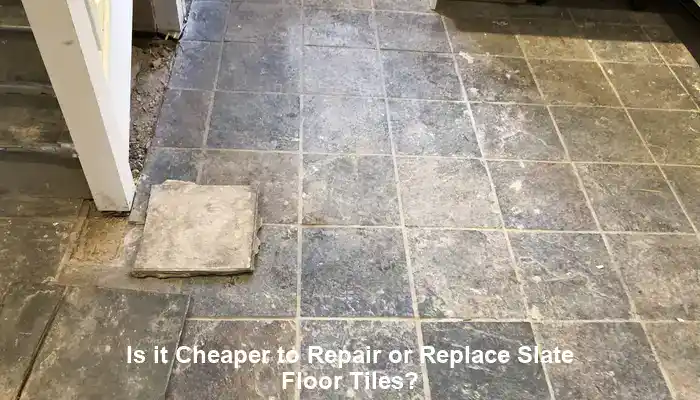
When dealing with damaged slate tiles that may show signs of cracks, chips, loose pieces, or missing pointing, the choice between repair and replacement should be informed by factors such as structural integrity, compatibility, and expected longevity, rather than solely by immediate costs. Instances of localized damage, tiles that produce a hollow sound when tapped, or uneven surfaces often indicate that repair might be a suitable option. On the other hand, persistent movement, failing joints, or significant mismatches typically suggest that replacement may be the more economical long-term solution. A prudent first step is to discern between isolated defects and a floor that is losing its structural integrity.
Refer to the sections below to evaluate whether the visible damage necessitates local repair, a comprehensive assessment, or complete replacement.
How Do You Determine If Your Damaged Slate Floor Should Be Repaired or Replaced?
If your slate floor displays cracks, chips, loose pieces, or missing pointing, your initial focus should not be on financial implications. Instead, assess whether the damage is isolated or indicative of more extensive issues with the floor. For example, a single broken corner near a kitchen entrance typically leads to a very different conclusion than multiple loose tiles scattered across an older floor. While visible damage is significant, the condition of the surrounding tiles often offers clearer insights.
A cracked slate tile may appear more serious than it is, as the dark stone can highlight light fracture lines. A contained crack, especially on a single slab with intact edges and stable neighbouring tiles, usually qualifies for a repair. In contrast, several cracks across adjacent slabs, especially if the floor feels hollow or uneven, raise concerns about overall reliability.
Minor chips on the edges can be rectified if the damage is minimal, the tile remains stable, and the surrounding surface maintains consistent colour depth. Chipped edges on a busy domestic slate floor can still retain their rustic appeal, rich texture, and natural variation after repair, provided the chip does not form part of a recurring movement issue. Conversely, a chip that continues to worsen after repair indicates a more significant problem.
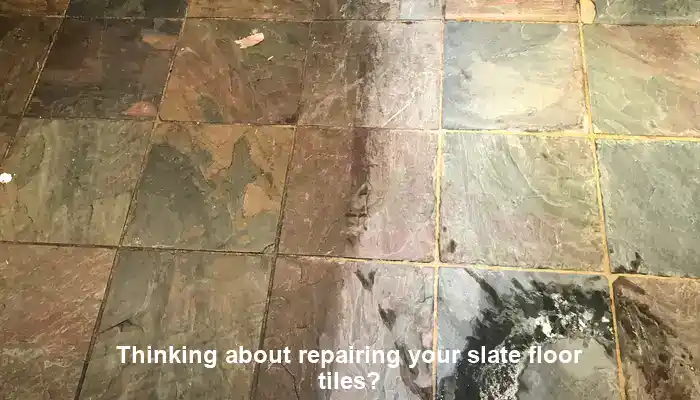
Loose slate tiles require careful evaluation, as they may seem minor at first but can lead to practical difficulties. A tile that clicks, rocks, or lifts at one edge can often be addressed locally if the surrounding floor is secure. a cluster of loose tiles near a doorway, heated area, or damp wall suggests that the issue may extend beyond what is immediately visible.
Slate pointing is essential for older floors. Missing joints can allow water, grit, and movement to infiltrate the gaps between slate slabs. Ageing pointing may be loose, sandy, or entirely absent, resulting in a stable floor that appears unkempt without any actual tiles breaking. In these situations, a breathable or flexible product is generally preferred over a hard, brittle patch, especially if a damp proof membrane is lacking and moisture rise poses a concern.
Uneven patches require attention, as they may reflect the natural riven character of the slate, indicate wear, or suggest that individual slabs have shifted. Slate slab lippage refers to height differences between adjacent tiles, where one edge sits higher than the other. Homeowners often perceive this as a raised edge, a trip hazard, or an area that complicates cleaning. A professional evaluation will ascertain if the slab is loose, if pointing has failed, and whether local re-fixing, careful easing, or broader replacement is necessary.
Slate surface shaling becomes a repair consideration when the top surface feels rough, flaky, or dusty rather than simply worn. Old shaling can make dark slate appear tired in high-traffic areas, leading homeowners to perceive a rough texture that regular cleaning fails to address. While this does not automatically necessitate replacement, it does indicate that the decision to repair should consider more than just colour.
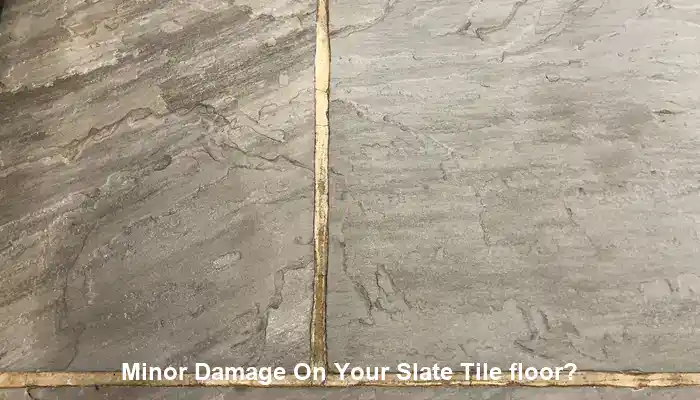
Previous repair patches can also influence the decision-making process. If the colour difference is minimal and the tile remains stable, a matching filler that has cured properly may still be acceptable. a patch that has deteriorated, trapped dirt, or created a hard edge against softer old pointing suggests that the previous repair was inadequate for the floor.
Evaluate colour mismatches separately from structural concerns. Natural slate tiles can vary significantly in source, finish, and age, making it uncommon for replacement tiles to blend seamlessly with an older floor. For instance, Welsh slate typically possesses high density and low porosity, while many domestically imported floors exhibit greater colour variation. In such cases, a well-executed repair may better maintain the floor's character than a small replacement that looks too new.
Surface wear can make damaged areas seem worse than they truly are. Faded pathways, dullness, and colour loss in high-traffic zones may occur alongside a repair issue without being the underlying cause. Consistent maintenance—such as using pH-neutral cleaners, removing grit before wet mopping, and timely resealing—is crucial for prolonging the lifespan of the floor. Practical routines are detailed in slate floor maintenance guidance. Avoid using vinegar, lemon, bleach, or limescale removers, as acidic cleaners and harsh chemicals can strip sealant, alter colour, and inflict permanent damage on natural stone.
A repairable slate floor usually has damage confined to a single area, with surrounding tiles remaining stable and a finish that allows for a sensible visual repair. If the floor exhibits issues across multiple areas, consistently loses joint material, or displays ongoing flaking, a more comprehensive evaluation is necessary before committing resources. Appropriate professional intervention will enhance the floor's appearance, stability, and maintenance, and a correctly sealed surface will be easier to care for than a worn, open, or poorly patched one.
What Do Cracks, Chips, and Loose Slate Tiles Reveal About Underlying Issues?
At first glance, cracks, chips, and loose slate tiles may appear similar; however, they often indicate different underlying problems within the floor. A clean impact chip might require a simple repair, while a loose tile could suggest adhesive failure, movement within the floor, or joint deterioration. Slate, being a fine-grained metamorphic rock, cleaves along natural planes, making it prone to surface breakdown and limiting restoration options to cleaning and sealing while being sensitive to harsh cleaning products.
Similar-looking slate damage does not always necessitate the same repair strategy.
Layered slate can separate along weak mineral planes; therefore, flaking, lamination loss, and surface degradation must be assessed honestly rather than concealed with filler. Slate surface shaling may leave behind slurry, rough texture, and loose flakes after cleaning, while true layer separation requires a more cautious repair discussion. A detailed examination of local repair decision-making can be found on this slate floor repair case page. The key question is whether the defect is contained, stable, and visually manageable.
What Signs Indicate a Low-Risk, Uncertain, or Likely Failure of Slate Repair?
Choosing the wrong repair method can lead to wasted resources, unresolved loose areas, and replacement patches that are more conspicuous than the original damage. Low-risk repairs typically involve a single damaged tile with stable edges, secure grout, and a surrounding floor that has not shifted. Chips, cracks, and similar damage can often be moulded, shaped, and cured using waterproof, weatherproof two-part epoxy repair putty, provided that adhesion is robust and a high-quality finish can be achieved.
Uncertainty arises when movement, colour matching, or joint condition raises concerns. Borderline repairs often involve slate pointing that has been redone, missing joints that continue to open, or replacement tiles that may not integrate well with the existing sealed floor. A finely honed slate floor offers a smooth, consistent surface that diffuses light evenly, while an impregnating sealer preserves the natural riven texture, and a topical sealer adds a low sheen.
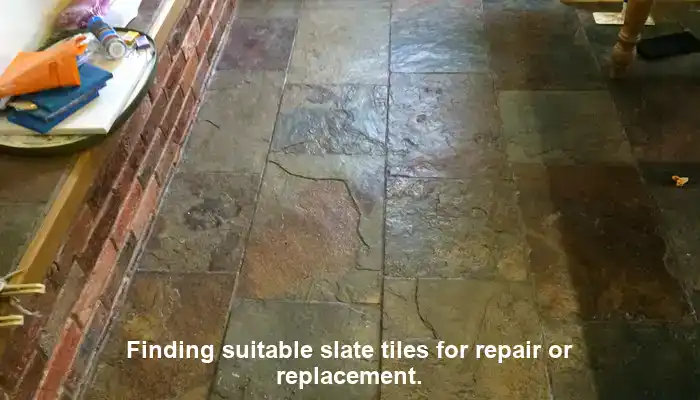
Likely failure is a reasonable conclusion when instability is widespread or the surface continues to degrade despite previous repairs. Poor-value repairs involve extensive layer separation, recurrent cracking, structural fissures affecting surface integrity, or lippage exceeding 2mm where levelling is not included in the agreed work. Although the floor may show significant improvement, a small patch should not be regarded as a comprehensive solution when the underlying condition is more complex.
How Can a Comprehensive Repair Suitability Assessment Guide Your Decision-Making?
A repair suitability assessment is vital for homeowners as it evaluates whether the damaged area, tile match, pointing, and long-term stability support repair before considering replacement. A qualified contractor should examine loose tiles, old pointing, grout stability, surrounding wear, damp areas, and the anticipated behaviour of the repair following normal use in a kitchen or hallway. This assessment prevents investment in visually appealing work that fails to address the underlying problem.
Repair suitability is also influenced by the method of slate installation and the floor's usage. Newly laid concrete requires adequate drying and curing time, as subsequent movement can cause tiles to crack, weaken adhesives, and disturb grout. Underfloor heating should be gradually increased from the lowest setting over four weeks to allow adhesives and grout to dry naturally around heated pipes. While damage from a hasty ramp-up may be repairable, understanding the cause is essential before approving replacement.
A thorough assessment should clarify what will be repaired, what will remain visible, and what circumstances might make replacement a more sensible option. Impregnating sealers maintain a natural finish, while topical sealers are preferable for colour enhancement or a low-sheen finish. Broader behaviour, sealing choices, and long-term care are detailed in slate floor behaviour in UK homes. Exercising clear judgment at this stage prevents unnecessary disruption and empowers homeowners to make informed choices.
What Key Considerations Should You Make Prior to Slate Pointing, Repair, or Replacement?
Before proceeding with slate pointing, tile repair, or replacement, the most sensible step is to move from decision-making to detailed method guidance. Homeowners should identify whether the work involves local repairs, re-sealing, grout cleaning, removal of old sealers, or broader surface preparation before granting approval. Detailed contextual behaviour is available in the slate floor care and behaviour hub. This wider perspective helps distinguish repair suitability from general flooring concerns.
Method details should address practical questions without requiring the homeowner to assume the contractor's role. Removing grout may necessitate a specialist tool to excise the problematic grout, fit matching replacement grout, and protect the kitchen floor edges, while deep cleaning may involve a rotary machine, brush agitation, and wet vacuum extraction to manage soiled residue. Further details on cleaning and sealing are covered in cleaning and sealing a slate floor. A professionally restored and correctly sealed floor is significantly easier to clean and maintain than a worn or improperly treated floor.
Broader restoration queries should remain distinct from the repair-or-replace decision. Issues such as sealer buildup, colour depth, old acrylic coatings, wet-look finishes, and contamination in recessed areas may influence the final appearance but should not cloud judgment regarding structural repairs. The behaviour of colour and finish is elaborated upon in why some slate appears faded. The floor can regain its clarity, richer natural colours, and a more cohesive appearance when the appropriate intervention aligns with its condition.
Aftercare considerations should be part of the decision-making process before work commences. A pH-neutral stone cleaner with a residue-free, finish-safe formulation aids in routine maintenance, while using a well-wrung mop, clean water, and grit removal reduces surface scratches, cloudy water, and detergent residues. Information on flaking and moisture-related risks is available in professional slate flaking repair guidance. Proper maintenance ensures that the repaired area remains cleaner for longer and helps the floor return closer to its original condition without unnecessary replacement.

David Allen — Abbey Floor Care
David Allen has over 30 years of experience with Abbey Floor Care, helping homeowners assess whether damaged slate floors require repair, pointing, sealing, or complete replacement. His buyer-guide work focuses on practical evaluation, including identifying local damage, unstable tiles, poor colour matching, and the limitations of patch repairs prior to engaging in unsuitable work.
The Article Slate Floor Repair Can Cost More Than Replacing first appeared on https://www.abbeyfloorcare.co.uk
The Article Slate Floor Repair: Often Costlier Than Replacement appeared first on https://fabritec.org
The Article Slate Floor Repair Costs: More Expensive Than Replacement Was Found On https://limitsofstrategy.com
The Article Slate Floor Repair Costs: Is It Worth the Extra Expense? found first on https://electroquench.com